Women's vs Men's Clothing Tags: How to Choose Right
If you run a clothing store, you have probably heard the line: “a tag is a tag — it makes no difference whether the garment is women's or men's.” In practice, though, the shops that bought into that idea have ended up either with punctured fabric and unhappy customers, or with tags that pull off a garment far too easily. Choosing the right clothing tag has much less to do with price than it does with fabric type, seam placement, theft patterns and even how customers shop — and those are exactly the points where a womenswear boutique and a menswear store part ways.
In this article from Vista Gate, we explain in plain, practical terms how tag selection differs between women's and men's stores, which fabric each tag type was designed for, and how to raise your store's security without damaging a single piece of stock.
Why tag selection isn't the same in women's and men's stores
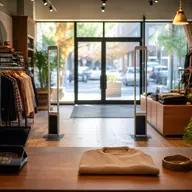
A retail anti-theft system has three parts: the security gate, the tag or label, and the detacher. The gate is much the same in either store — but the tag is the part that touches the merchandise directly. That's why the following differences change the decision:
- Fabric type and thickness: womenswear leans heavily on thin fabrics — chiffon, tulle, satin and fine knits — while menswear revolves around denim, heavy cotton, wool and suiting cloth.
- Value per item: in a women's store, an expensive coat or occasion jacket hangs next to a cheap top or scarf, which means you need more than one level of protection.
- Fitting-room behaviour: women's customers try garments on more often on average, so the tag has to sit where it doesn't get in the way of a fitting but still can't be worked loose.
- Theft patterns: in womenswear, theft concentrates on small, easily bundled items — scarves, socks, underwear. In menswear, it's jeans, shirts and jackets.
- Appearance matters more: in women's clothing, how the tag looks and any mark it leaves on the fabric carry real weight and can affect the purchase decision directly.
How fabric type drives tag choice
Fabric is the single most important selection criterion. The classic mistake is ordering one tag model for the entire store, then being forced to leave part of the stock untagged.
Womenswear: thin, delicate fabrics
Chiffon, tulle, viscose, satin and lightweight knits don't get along with the thick pin on a standard tag. A pin of ordinary diameter can open up the weave and leave a visible hole behind. For this category we recommend:
- Fine-pin tags: a pin of roughly 1 mm or less, which leaves no noticeable mark on the fabric.
- Lanyard tags: no pin at all — a metal cable threads through a hanging loop or buttonhole. The best option for occasionwear and very fine fabrics.
- Soft labels: for lightweight items such as scarves, socks and underwear that are sold in packaging.
Menswear: heavy fabric and coarse weave
Menswear fabric is generally tougher, and the challenge flips: the tag now has to be strong enough that it won't come off if someone simply pulls at it.
- Clamshell or teardrop tags with a standard pin: the economical, hard-wearing choice for shirts, trousers and T-shirts.
- Long-pin tags: for jackets, overcoats and heavy garments where a standard pin won't pass through the fabric.
- Pencil (bar) tags: made for jeans, which top the theft statistics. Fitted inside the waistband or at the fly, they are effectively impossible to tear off.
- Ink tags: for high-value items such as suits and branded overcoats. Force one off and the ink bleeds across the fabric, leaving the garment worthless to the thief.
Clothing tag comparison for women's and men's stores
| Tag type | Best for | Priority in a women's store | Priority in a men's store |
|---|---|---|---|
| Standard clamshell tag | Ordinary fabric, medium thickness | Medium | High |
| Fine-pin tag | Chiffon, tulle, satin, viscose | Very high | Low |
| Pinless lanyard tag | Occasionwear, bags, items with loops | High | Low |
| Pencil and bar tags | Denim, trousers, heavy garments | Low | Very high |
| Ink tag | High-value and branded stock | Medium | High |
| Soft label | Scarves, socks, underwear, packaged goods | High | Medium |
At vista-eas.com, all six categories above can be ordered separately in packs of 100 and 500, so you can build a mix that matches your own product range.
Where to place the tag on women's and men's garments
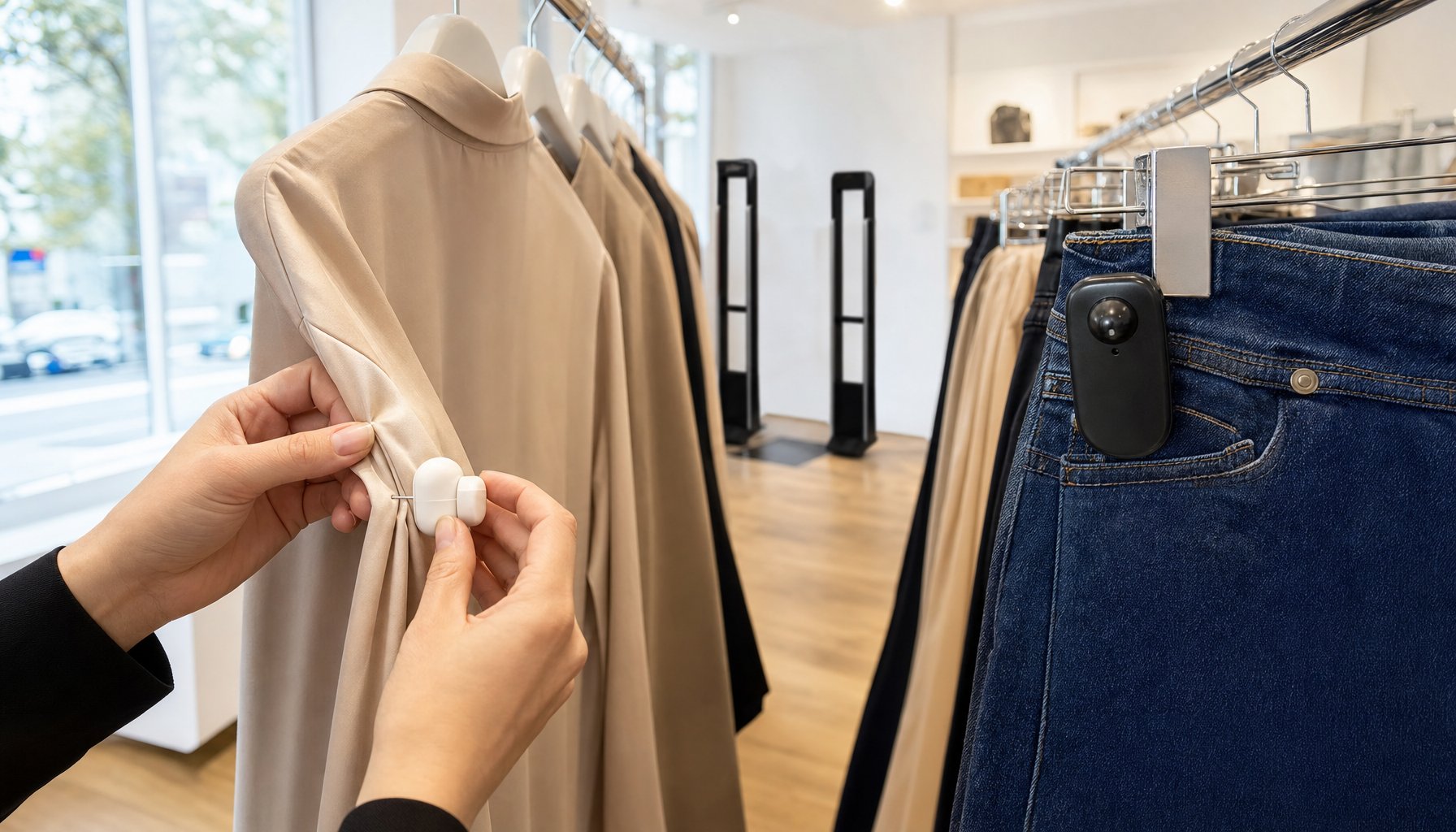
Even the best tag will annoy customers and weaken your security if it goes in the wrong place. The general rule: fit the tag on a double seam or a thick point of the garment, never in the middle of the fabric.
- Coats and overcoats: the side seam of the sleeve or the bottom hem.
- Occasion dresses and chiffon blouses: use a lanyard tag through the hanging loop or a buttonhole — never pierce the fabric itself.
- Men's jeans: the waistband seam or the leg hem, ideally with a pencil tag.
- Men's shirts: the side seam or bottom hem, at least 3 cm away from the main stitch line.
- Jackets and blazers: use the inner lining so the pin mark stays out of sight.
- Scarves and headscarves: a soft label on the packaging or the product label.
One important note: never place a tag on a pocket, a shoulder seam, or anywhere the customer will have to move it while trying the garment on. That single habit is the biggest cause of damaged tags in clothing stores.
AM or RF: which system suits your clothing store?
Before you buy tags, you need to know which technology your security gate uses, because an AM tag won't trigger an RF gate and vice versa.
- AM at 58 kHz: higher detection accuracy, fewer false alarms and a wider range of up to about 1.8 m. Suited to large clothing stores, hypermarkets and shops with a wide entrance.
- RF at 8.2 MHz: lower cost per tag and label, suited to small and mid-size shops with an entrance of roughly 1.2 to 1.5 m.
For most women's boutiques — narrow doorway, lots of small items — RF works out more cost-effective. But if you run a menswear store or a multi-floor space with a wide entrance, AM is the more dependable choice. Acrylic and metal gate models for both technologies are listed at vista-eas.com with full specifications and warranty.
Common mistakes when buying clothing tags
- Ordering one tag model for the whole store: the result is that 20 to 30 percent of your stock ends up effectively unprotected.
- Ignoring detacher strength: strong tags need a detacher of at least 12,000 gauss. A weak magnet leads to forced removal and torn garments.
- Buying tags that don't match the gate frequency: the most frequent mistake of all. Always state your gate's frequency before ordering.
- Using cheap tags without a proper spring lock: these pop open with a simple rubber band and provide no real security.
- Attaching the tag to the price ticket instead of the garment: the thief simply removes the ticket and walks out with the item.
Your clothing tag selection checklist
Answer these five questions before you place an order:
- Is my store's gate AM or RF?
- What percentage of my stock is thin, delicate fabric?
- Which are my highest-value items, and do they need ink tags?
- How many times a day are tags attached and removed? (This determines how many detachers you need.)
- Do I carry packaged items such as socks and underwear that call for soft labels?
Answer those five and the right tag mix for your store falls into place in under ten minutes.
Summary and free consultation
The difference between tagging a women's store and a men's store isn't a matter of taste; it follows directly from fabric type, item value and theft patterns. A women's store needs the lightest, least damaging tags; a men's store needs the toughest. The smart move is to carry a mix of two or three tag types rather than one type for everything.
The specialists at Vista Gate can tell you exactly which tags and which gate you need based on your floor area, entrance width and product range. For a free consultation and a price quote, call us now or place your order through vista-eas.com — shipping is available nationwide across Iran, with a product replacement warranty.