
Security Tag Detachers: Magnetic, Mechanical & Electric
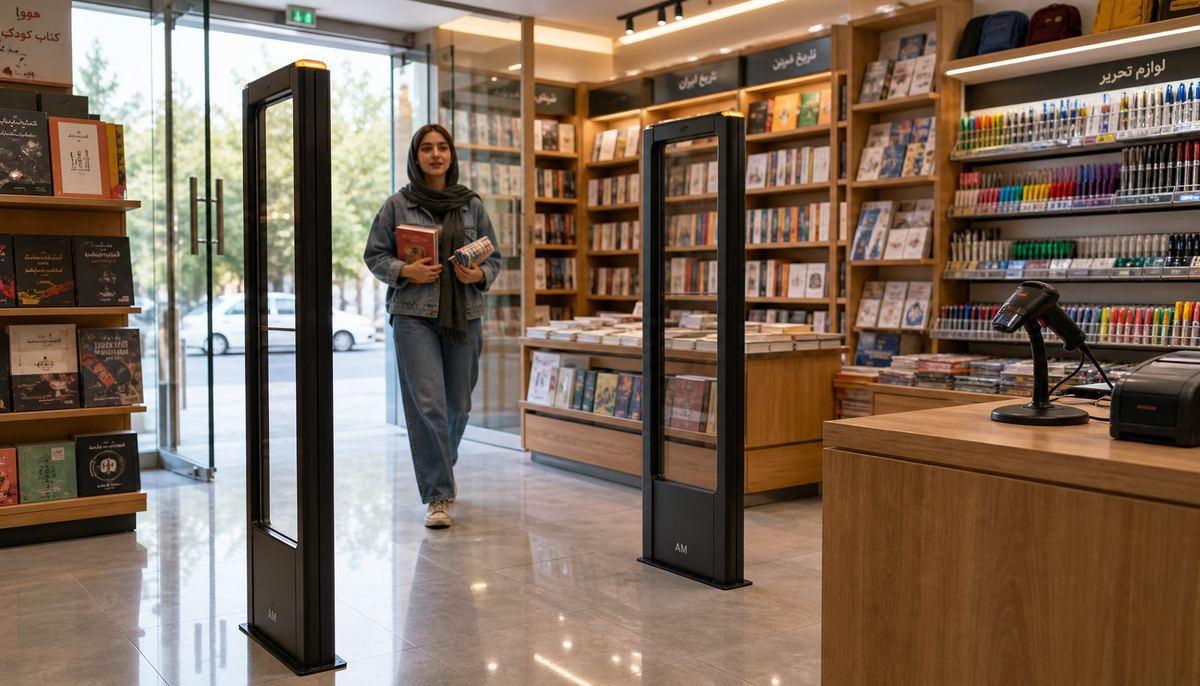
Every store running EAS gates and security tags eventually runs into one small but mission-critical piece of hardware: the tag detacher. Without it, your cashier simply cannot get the tag off the garment at checkout, and the whole sales process grinds to a halt. In this guide we break down the different types of detacher by mechanism, strength, best use case and what to watch for when buying, so you can match the right model to your merchandise and your checkout volume.
What is a tag detacher, and what does it do for store security?
A tag detacher is the tool that releases the internal lock on a hard security tag so the tag can be removed without damaging the product. Hard tags are typically made up of a plastic housing and a metal pin, held shut inside the housing by a set of steel ball bearings and a spring. Yanking the tag off by hand won't open it — it will tear the fabric, and on ink tags it can burst the ink vial and ruin the garment outright.
Think of the detacher as the missing link between your EAS gates and your security tags. The gate sounds the alarm, the tag protects the merchandise, and the detacher removes that protection cleanly and legitimately at the moment of sale. Choose the wrong detacher and checkout lines back up, stock gets damaged, and eventually staff stop tagging items altogether — which means the money you spent on loss prevention is money wasted.
At Vista Gate we stock detachers for both AM and RF tag systems, and you can browse the full range at vista-eas.com.
Types of tag detacher by mechanism
Detachers fall into three main families, each designed for a particular kind of tag and retail environment:
- Magnetic detachers: use a permanent magnet and a powerful magnetic field to release the ball bearings inside the tag.
- Mechanical detachers: use physical force, a lever or a steel hook to release the pin or cable.
- Electric detachers: use a coil powered from the mains or an adapter to generate a controlled magnetic field on demand.
Choosing between the three has far less to do with budget than it does with the type of tag you use and how many transactions your till handles in a day.
Magnetic detachers: the go-to choice for apparel stores
Magnetic detachers are by far the most widely used type on the market. They usually sit on the counter as a metal or plastic unit shaped like a dome, a rectangle or the classic "turtle" puck. Their strength is measured in gauss, and most models on sale fall between 6,000 and 15,000 gauss.
How many gauss do you actually need?
The rule is simple: the more secure the tag and the tighter its lock, the more gauss you need. Basic clamshell and pencil tags will release on a 6,000–8,000 gauss detacher, but the SuperLock and HyperLock tags used by chain apparel retailers generally need 12,000 gauss or more. Buying a detacher that's weaker than your tags demand is the single most common mistake we see — the result is staff pressing the tag against the pad over and over until both the tag and the detacher are ruined.
Strengths and limitations
- No power supply or cabling needed — drops onto any checkout counter
- Fast: each tag releases in under a second
- Long service life, since there are no moving parts
- Fairly heavy (some models top a kilogram), which makes them awkward to move
- Sensitive to nearby magnetic items such as bank cards, watches and hard drives
If you run a clothing, bags and footwear or chain retail store, a magnetic detacher is almost always your first choice.
Mechanical detachers: the answer for lanyard tags and bottle locks
A mechanical detacher contains no magnet at all — it works by pressure, leverage or a twisting action. This type is mainly used for lanyard and cable tags, bottle locks and box safers, and the specialist tags fitted to eyewear and cosmetics. The most common form is a small steel hook or plier that pulls the pin back out of the loop.
Some mechanical models are built as a dedicated key, meaning they only open that specific series of tags. That matters for retailers worried about professional shoplifters getting hold of a detaching tool: unlike a magnet, which anyone can pick up at a hardware shop, a mechanical key is not easy to duplicate.
The downside is slower operation and gradual wear. On a till that opens more than two hundred tags a day, the steel hook works loose within a few months and has to be replaced. For that reason we usually recommend a mechanical detacher as a companion tool alongside a magnetic one, rather than a replacement for it.
Electric detachers: built for high-volume checkouts
An electric detacher uses a coil that, when connected to mains power or an adapter, produces a strong and controlled magnetic field. Its big advantage is that the field is only live at the moment of use, so for the rest of the trading day the bank cards and electronics sitting on your counter are safe.
These models are typically found in large-format stores, hypermarkets and chain brands — anywhere a cashier has to release several tags a minute during peak hours. More advanced versions are recessed into the counter surface, so the cashier simply slides the item across a marked spot.
- Stronger field than permanent-magnet units, compatible with SuperLock tags
- Safer for magnetic stripe cards and nearby equipment
- Can be mounted flush for a tidier checkout counter
- Dependent on power — without a UPS, a blackout takes it offline
- Higher price than the other two types
Tag detacher comparison table
| Feature | Magnetic | Mechanical | Electric |
|---|---|---|---|
| Power required | No | No | Yes |
| Release speed | Very fast | Moderate | Very fast |
| Compatible tags | AM and RF hard tags | Lanyards, bottle locks, eyewear | Hard tags and SuperLock |
| Risk to bank cards | High | None | Low |
| Upfront cost | Budget-friendly | Budget-friendly | Higher |
| Best for | Apparel and boutiques | Supermarkets and accessories | Hypermarkets and chains |
Which detacher is right for your store?
To get this right, answer three questions:
- What kind of tag are you using? If it's a magnetic hard tag, you need a magnetic or electric detacher. If you use cable tags or bottle locks, you'll need a mechanical unit as well.
- How many tags do you remove per day? Under 100 tags a day, a single 12,000 gauss magnetic detacher is plenty. Above 300, a recessed electric model is the smarter investment.
- What's your checkout area like? If card readers, computers or credit cards are constantly moving across the counter, go for an electric model or a magnetic one with a shielded housing.
Jewellery stores and pharmacy chains usually end up using all three, simply because their product range and packaging sizes vary so widely. Send the Vista Gate team a photo of your checkout layout and they can recommend the right combination.
Maintenance and common mistakes
Looked after properly, a magnetic detacher can last more than ten years — but a few simple mistakes will kill it much sooner:
- Drops and knocks: dropping a neodymium magnet onto a hard floor can crack it and cause a sharp loss of magnetic strength.
- Heat: keeping the detacher near a heater or in direct summer sunlight gradually weakens the magnet.
- Storing bank cards next to it: sliding a card across the detacher wipes its magnetic stripe — keep cards well away from the till point.
- Using too few gauss for a strong tag: this puts heavy strain on the tag body and cracks the plastic.
- No backup detacher: if your only unit fails, sales stop. Always keep a cheaper spare on hand.
We also suggest testing your detacher against a brand-new tag every six months. If it now takes more pressure or more twisting than it used to, it's probably time to replace it.
Buying advice and detachers from Vista Gate
A detacher looks like a minor purchase, but it directly affects checkout speed, product condition and how well your entire loss-prevention system actually works. Alongside magnetic, mechanical and electric detachers, Vista Gate supplies AM and RF security gates, security tags and labels, barcode scanners and thermal printers, so you can source your complete store setup from one place.
If you're not sure which model works with the tags you already have, call our team or request a free consultation through vista-eas.com. One short conversation can save you from buying the wrong unit and paying twice.