Cosmetics Store Security: EAS Gates, Tags & Labels
If you run a cosmetics and personal care store, this will sound familiar: you close out the month's stock count and the number of lipsticks, mascaras or sunscreens on the shelf doesn't match what the system says you should have. No invoice was ever raised for them. That gap is what retail calls shrinkage, and the largest share of it comes straight off the shelf. A cosmetics security system is built for exactly this problem: protecting small, expensive, high-demand items that fit in a pocket.
This guide takes a practical look at what a retail anti-theft system for a beauty store actually consists of, which tag or label suits each product type, whether AM or RF gates are the better fit, and how to secure your highest-risk shelves without making the shop feel like a checkpoint.
Why is the cosmetics aisle the most-stolen-from section of the store?
Shoplifting is rarely random. Professional thieves — and even opportunistic shoppers — go for products with four specific traits. Cosmetics and personal care items tick all four at once:
- Small and lightweight: a lipstick or eyeshadow disappears into a sleeve, a bag, or a closed hand.
- High value for their size: a designer fragrance or anti-wrinkle cream can be worth a small fortune while being smaller than a phone.
- Easy to resell: the grey market and online resale pages absorb these items with no questions asked.
- Open display: beauty retail only works if customers can pick up a product, use a tester and swatch a shade on their skin. The stock has to stay within reach.
Add to that the fact that cosmetics fixtures are usually tall and densely packed, blocking your staff's line of sight. The result is a combination where even a shop with two or three people on the floor cannot stop shrinkage through human supervision alone. Chain retailers consistently find that a properly implemented EAS system produces a marked drop in beauty-category shrinkage — and more importantly, the deterrent effect means most of those thefts never get attempted in the first place.
What does a cosmetics store security system consist of?
When we talk about a "cosmetics security system", we don't mean a single device. We mean a three-part system, and if any one part is missing, the whole chain stops working.
1. Security gates (the entrance pedestals)
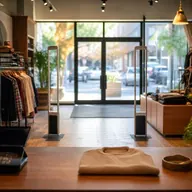
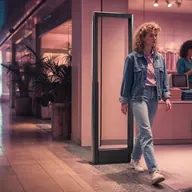
The gates are the pedestals installed on either side of your entrance, generating an electromagnetic field. When an item carrying a live tag or label passes between them, an audible and visual alarm fires. The gate is your store's last line of defence.
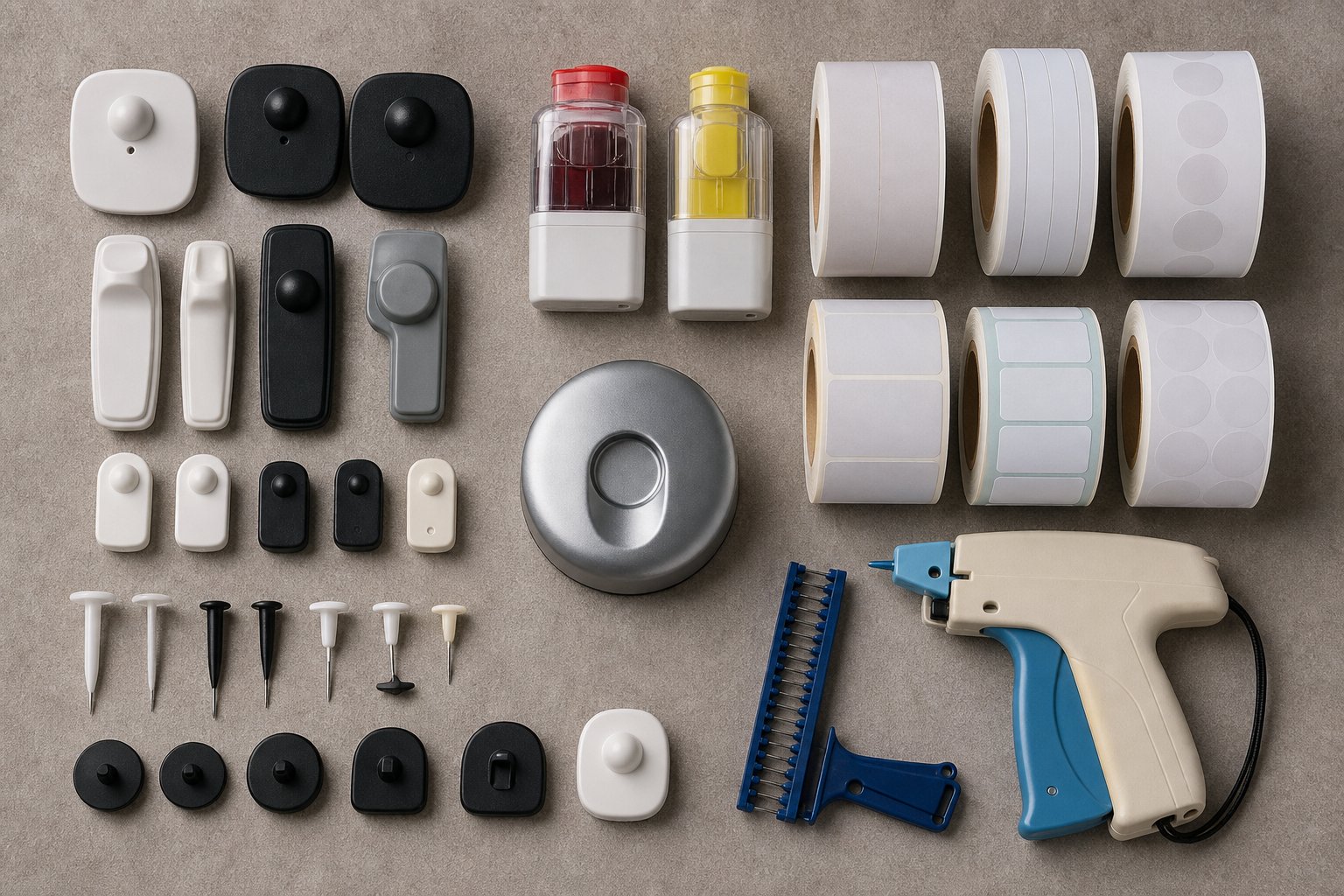
2. Security tags and labels
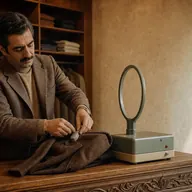
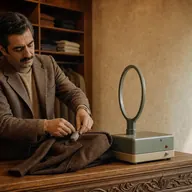
Hard tags and soft labels attach to the product itself. Hard tags are reusable and are released with a magnetic detacher; soft labels are single-use and are switched off at the till with a deactivator.
3. Checkout equipment
Your till needs two tools: a detacher to remove hard tags and a deactivator to kill soft labels. Without them, the alarm goes off on genuine paying customers — and it only takes a few of those incidents before staff write the system off as a nuisance and quietly switch it off.
You can compare the complete range of this equipment, with full specifications and real product photos, at vista-eas.com.
AM or RF gates? A comparison for beauty retail
Two technologies dominate the market: AM at 58 kHz and RF at 8.2 MHz. Choosing the wrong one is by far the most common reason retailers end up unhappy with their EAS system.
| Criterion | AM gate (58 kHz) | RF gate (8.2 MHz) |
|---|---|---|
| Coverage width per aisle | Up to around 180 cm | Up to around 120 cm |
| Sensitivity to metal and foil | Low | High |
| Sensitivity to liquids and creams | Low | Medium to high |
| False alarm rate | Low | Medium |
| Consumable label cost | Higher | Lower |
| Best suited to | Hypermarkets, fragrance retail, wide entrances | Beauty boutiques, small shops with narrow doorways |
The key point for a cosmetics store is that a large share of your stock comes in foil-lined packaging or contains liquid — fragrances, toners, shampoos, sprays and nail polish. Those are precisely the two things that interfere with RF labels. That's why stores with a heavy fragrance and liquid mix are usually safer choosing an AM gate. On the other hand, if your shop is small, your doorway is under 120 cm and you mostly sell dry cosmetics such as eyeshadow palettes and lipsticks, RF does the job perfectly well at a lower running cost.
Which tag or label for which product?
This is the part most stores get wrong. One label type will not cover your whole range:
- Lipstick, mascara, eyeliner, nail polish: the smallest surfaces you'll deal with. Miniature rectangular labels or slim pencil tags are your best option — and the label must never cover the barcode or expiry date.
- Eyeshadow palettes, foundation, concealer: a flat surface with room to work. A standard soft label on the carton does the job.
- Fragrances: your highest-value group and the number one target. Use two layers here: a label inside the box plus a lanyard tag looped around the neck of the bottle.
- Premium sunscreens and anti-wrinkle creams: a short-pin hard tag on the carton, or security seals across the cap.
- Very high-value or very small items: a safer box — a clear security case. The product stays visible and can be picked up, but it won't open without the right key.
When buying labels, check the frequency. An RF label simply will not work on an AM gate, and vice versa. It's the simplest mistake in the book and also the most common. On the Vista Gate online store, tags and labels are grouped by frequency so that this can't happen.
Securing high-risk shelves: going beyond the entrance gate
The gate only controls the moment of exit — and an experienced thief knows exactly where to peel the label off. That means the shelf itself has to be hardened too:
- Shelf locks and security rails: for the fragrance row and anything above a certain price point, locking pusher rails let customers take only one unit at a time.
- Clear safer boxes: rigid plastic cases with a magnetic release, ideal for premium creams and gift sets.
- Close-range CCTV: one decent-resolution camera over the beauty aisle both deters theft and produces usable evidence when it happens. We recommend mounting it looking down the length of the aisle, not across it.
- Eliminate blind spots: keep mid-floor fixtures below the eye line from the till, and cover corners with convex mirrors.
- Placement of high-value stock: as close to the till as possible and as far from the exit as possible.
Cost and return on investment: does it actually pay off?
Plenty of retailers put off buying an EAS system because they see it purely as a cost. But the arithmetic is simple: add up the value of stock that has gone missing without an invoice over the past three months. In an average cosmetics store, that figure typically exceeds the price of a complete gate setup within a few months.
The cost breaks into three parts: the one-off spend on gates and checkout equipment, the consumable cost of labels per item, and hard tags — which, being reusable, are effectively a long-term asset. Our practical recommendation is to tag only your top 20 percent most valuable products in phase one: the same 20 percent responsible for most of your losses. Then expand coverage from there.
Common mistakes that render your system useless
- Switching the gate off or turning down its sensitivity: the most frequent one by far. Frequent false alarms point to a calibration issue or electrical interference, not a faulty system — fix the cause, don't mute the symptom.
- Putting the label on the outer wrapper: it comes off in seconds. The label belongs on the product box itself.
- Always placing the label in the same spot: a repeat offender memorises the position. Vary it.
- Installing gates next to a metal door or electrical panel: this causes interference and false readings. Respect the minimum clearance specified.
- Not training your staff: if a sales assistant doesn't know how to handle an alarm calmly and to a set script, the system turns into a source of friction with customers.
Summary and next step
The cosmetics and personal care aisle is the most profitable and the most vulnerable part of your store at the same time. The right answer is a combination: a gate matched to your product mix and doorway width, tags and labels chosen around your packaging materials, the right equipment at the till, and a layout with no blind spots. None of these is enough on its own — together they cut shrinkage dramatically.
The Vista Gate team is ready to review your floor area, entrance type and product range, and tell you exactly which combination of gates, tags and labels makes financial sense for you. For free advice and a price quote, call us now or leave a message through the consultation request form at vista-eas.com — one of our specialists will get back to you shortly.