AM Security Gates: High Performance for Big-Box Stores

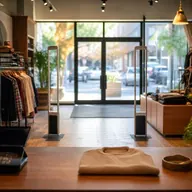
Once your store runs past a few thousand square feet, has wide entrances, and sees hundreds of shoppers a day, choosing a loss-prevention system stops being a matter of taste and becomes an engineering decision. At that scale, the AM security gate (acousto-magnetic) has effectively become the retail industry standard worldwide. The reason is simple: the bigger and busier the store, the more every system error costs you — whether that error is a false alarm or a stolen item walking straight out the door.
In this article we take a practical look at how AM technology works, why it outperforms RF in large stores, which models suit which entrances, and exactly which specs to ask about before you buy.
What is an AM security gate, and how does it differ from RF?
Electronic article surveillance (EAS) systems come in two main families: RF, which operates at a radio frequency of around 8.2 MHz, and AM, which uses an acousto-magnetic frequency of 58 kHz.
In RF technology, the transmitting antenna creates a radio field and the label resonates inside that field. It is cheap and widely used, but it is sensitive to electromagnetic noise, metal, and moisture. An AM gate, by contrast, works by sending short magnetic pulses: the pulse fires, the transmitter goes quiet, and the receiver listens for the AM tag ringing in the silence between pulses. That pulsed architecture is exactly why AM produces far fewer errors in busy environments packed with electrical equipment.
A quick comparison of the two technologies
| Feature | AM gate | RF gate |
|---|---|---|
| Operating frequency | 58 kHz | 8.2 MHz |
| Aisle width per pair | Up to about 180 cm | Typically 90 to 120 cm |
| Hard tag detection rate | Very high (95 to 99 percent) | Good (70 to 90 percent) |
| Sensitivity to noise and metal | Low | High |
| Performance on liquids and foil | Acceptable | Poor |
| Upfront cost | Higher | Lower |
| Best suited to | Hypermarkets, chain stores, wide entrances | Boutiques, small shops, narrow entrances |
Why is an AM gate the first choice for large stores?
In a large store, three things matter more than anything else: entrance width, foot traffic volume, and product variety. An AM security gate has the edge on all three.
- Wider coverage with fewer pedestals: A single pair of AM antennas can cover roughly 180 cm. A 5-metre entrance is handled with three or four pedestals, whereas RF would need more units — meaning narrower aisles and a more cluttered look at your door.
- Fewer false alarms: A hypermarket runs dozens of electrical devices at once — commercial refrigeration, inverters, LED lighting. The pulsed AM architecture stays far more stable against that noise, so shoppers do not get stopped at the door for no reason.
- Handles difficult merchandise: Beverages, cleaning products, foil-wrapped packaging, and metal cans are a nightmare for RF. AM copes with them far better, which is why it dominates large supermarkets and cosmetics retail.
- Fast throughput, no bottleneck: A high detection rate means you do not have to crank sensitivity up to compensate. The result is smooth customer flow during peak hours.
- Longer life and better resilience: AM hard tags and DR (dual-resonator) labels are harder to defeat or deactivate without authorisation.
What a complete AM system is made of
Buying the gate alone is not enough. An effective AM system has several parts, and they all need to share the same frequency and family:
- Gate pedestals (transmit and receive antennas): Available in clear acrylic, ABS, or laminated MDF housings. The material choice is about matching your store decor more than performance.
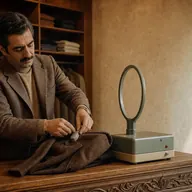
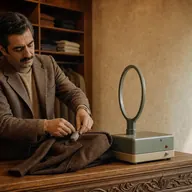
- AM hard tags: For apparel, bags, and footwear, paired with the matching pin. For jewellery and delicate items, lanyard and cable tags are used instead.
- AM soft labels: For packaged and consumable goods, deactivated at the checkout with a deactivator.
- Deactivator and detacher: Inseparable from the system. Without a deactivator, the label on an item your customer just paid for will still set off the alarm.
- People-counting and alarm module: Tracks foot traffic and alarm events, which is genuinely useful for spotting your highest-risk hours.
At vista-eas.com all of these components are supplied as a matched set, so you never run into frequency mismatch or a drop in sensitivity — one of the most common problems we see when equipment is bought piecemeal from different suppliers.
Which stores get the most out of an AM gate?
Installation experience shows the payback on an AM gate comes fastest in these categories:
- Hypermarkets and large supermarkets: Wide entrances, huge product variety, and plenty of liquids and metal.
- Apparel chains: Clothing theft tends to be single-item and frequent; AM hard tags combined with gates create a strong visible deterrent.
- Large pharmacies and health and beauty stores: Small, high-value items — precisely what shoplifters target.
- Home appliance and hardware stores: Bulky boxes and metal items that RF simply cannot handle.
- Jewellery and gold retail: Using lightweight cable tags alongside CCTV cameras and safer boxes.
Technical criteria to check before you buy an AM gate
Before you place an order, ask your supplier about these parameters and get them written on the invoice:
- Effective coverage width: The real figure with both hard tags and soft labels, not the marketing number. Coverage with soft labels is always lower than with hard tags.
- Detection height: A good system catches items held low near the floor as well as above head height. A blind spot near the ground is a classic weakness.
- Synchronisation capability: If you have more than one pair of gates, or neighbouring stores with gates, synchronisation is essential.
- Digital sensitivity adjustment: A control board tuned in software, not by analogue trim pots.
- Power supply and surge protection: Mains voltage fluctuations are the number one killer of gate control boards.
- Warranty and after-sales support: More important than the hardware itself. Always check the availability of spare boards and a local technician.
Cost and return on investment
An AM gate costs more than RF, but the maths is straightforward: if a store loses just two mid-priced items a day to theft, within a few months it has bled several times the price of the system. In large stores, the payback period on an AM gate is typically reported at three to nine months.
Installation and setup: the details that double your performance
A large share of complaints along the lines of the gate does not work properly have nothing to do with the hardware — they come down to installation:
- Never exceed the manufacturer's stated pedestal spacing. Every extra 10 cm costs you noticeable sensitivity.
- Keep the checkout counter, monitors, the deactivator, and power cabling at least two metres away from the pedestals.
- Do not install gates over floors with dense rebar, or right next to a powered metal door. If you have no choice, get a professional calibration.
- Lay out your fixtures so customers cannot pass merchandise around the side of the gate — professional theft almost always uses those side routes.
- After installation, run a live test with tags and labels at various heights, and get the results handed to you in writing.
Combining AM gates with other retail equipment
A gate is the first layer of security, not the only one. A large store typically puts this set together:
- CCTV cameras covering the entrance and blind spots, so you have footage of the moment the alarm sounds.
- Barcode scanners and thermal receipt printers for faster checkouts — long queues are themselves a driver of theft.
- Laptop locks and safer boxes for high-value items on open display.
- Specialised tags matched to each product type. One tag does not fit everything.
The full range of this equipment — from AM and RF gates to tags, labels, deactivators, cameras, and checkout hardware — is available at vista-eas.com, and the Vista Gate team can recommend the optimal combination based on your store's floor plan and square footage.
The bottom line
If your store is large, busy, and carries a wide range of products, an AM security gate is a smarter investment than the cheaper RF option: wider coverage, fewer errors, more reliable detection, and more peace of mind for you and your customers. The key is to buy the system as a matched set — gate, tags, labels, and deactivator — and to have it installed properly.
To find the right model for your entrance, talk to the Vista Gate team today. Just send us your floor plan or entrance width and the type of products you sell, and you will get free advice, a technical recommendation, and current pricing. Browse the models and place an order at vista-eas.com, or reach us on WhatsApp.