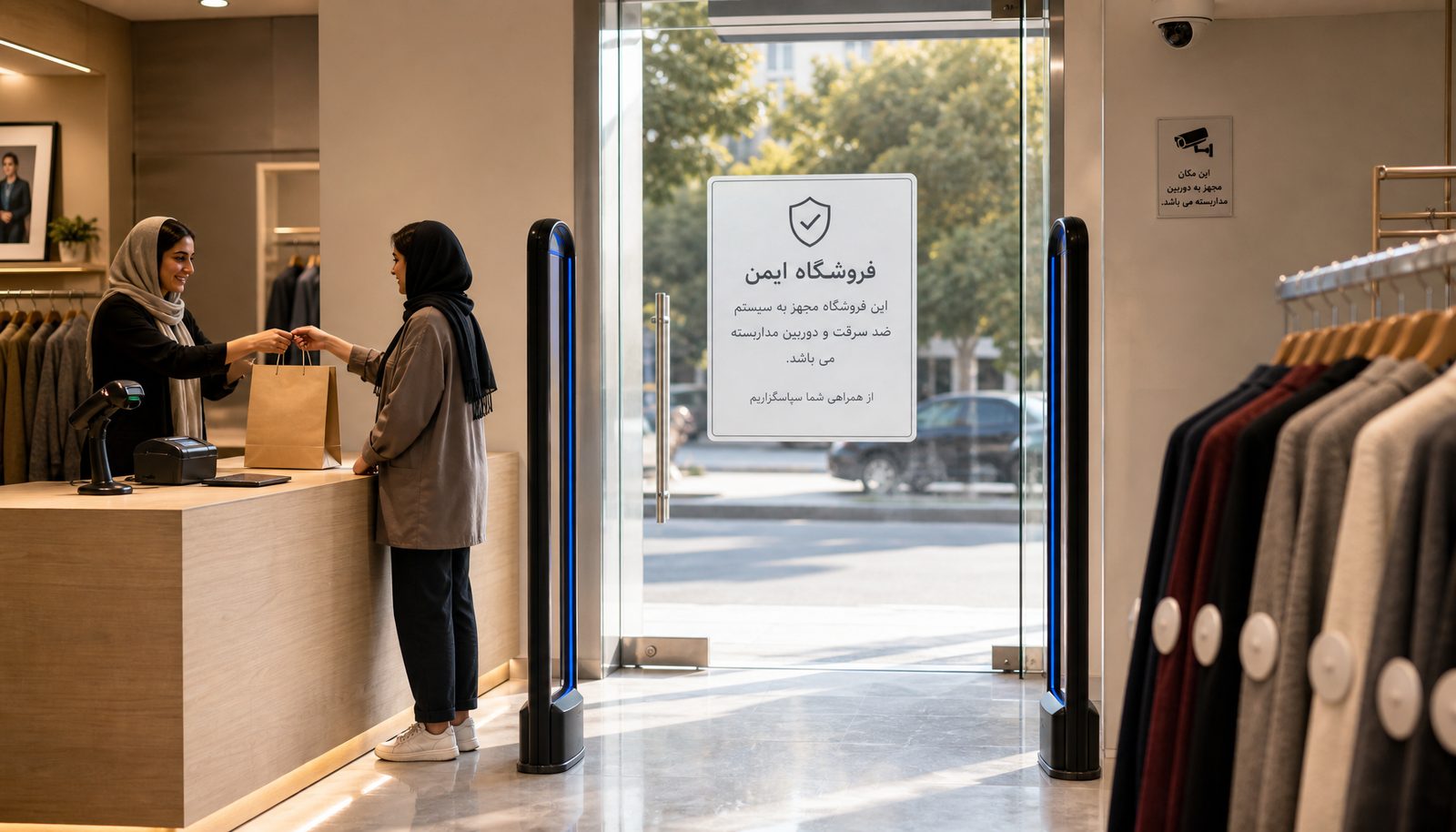
How to Tell Customers About Your Store Security System
Plenty of retailers hesitate the moment they switch on a store security system, and the worry is always the same: “If shoppers see the anti-theft gates and the cameras, won't they think we're accusing them?” Thousands of installed systems point to the opposite conclusion. Honest customers aren't scared off by visible security — the person planning to steal is. The real question was never whether to tell people, it's how.
In this article we walk through, step by step, how to announce your security gates, security tags and labels, and CCTV cameras in a way that delivers maximum deterrence without souring the shopping experience.
Why being upfront about security works in your favour
Hidden security only earns its keep after a theft has already happened. Announced security starts working the second someone walks through the door. There are three clear reasons to be transparent:
- Deterrence before the fact: A practised shoplifter “scans” a store in the first 10 to 15 seconds. If they see gates, signage and cameras, in most cases they simply won't take the risk.
- Less friction when the alarm sounds: When a shopper already knows there are gates, and that a label occasionally slips through without being deactivated, the beep isn't an insult — it's just a routine hiccup.
- It makes the store look professional: A shop with a tidy, clearly signposted security setup reads as “organised and trustworthy” — exactly the impression major apparel brands and hypermarkets work hard to create.
The golden rule: frame the message around protection, not accusation
The single biggest mistake in security messaging is an accusatory tone. A sign reading “Shoplifters will be prosecuted” tells the 99% of customers with no bad intent whatsoever that they're under suspicion. The same message can be delivered very differently.
Sample wording for signs and stickers
- “This store is protected by an electronic article surveillance system.”
- “Security gates are in operation to protect our stock and keep your visit hassle-free.”
- “Before you leave, please make sure the security label on your purchase has been deactivated.”
- “CCTV in operation — for the safety of our customers and staff.”
The difference is subtle but decisive: in every one of these lines, the customer is the person being protected, not the person being suspected. That shift in tone alone brings a noticeable drop in customer complaints.
Your messaging toolkit: what works where
Security messaging isn't one layer — it's several, starting on the pavement outside and running all the way to the till.
| Tool | Where it goes | Core message | Deterrent effect |
|---|---|---|---|
| Entrance sign | On the glass or beside the door | This store uses article protection | Very high |
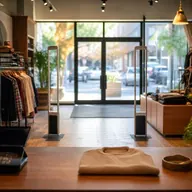
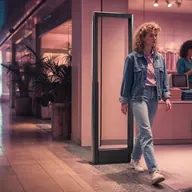
| AM/RF anti-theft gate | Entrance and exit doorway | Security you can physically see | Very high |
| Security tags and labels | On the merchandise itself | This item is protected | High |
| CCTV sticker | Window display, aisles, till | Area under video surveillance | Medium to high |
| Live public-view monitor | Near the till | The shopper sees themselves on screen | Very high |
| A word from staff | At the point of handover | “I've deactivated the tag for you” | Medium |
In fashion retail, the winning combination is a gate plus hard tags; in supermarkets and pharmacies it's a gate plus adhesive soft labels. If you're still not sure which technology suits your layout, the specialists at Vista Gate will recommend the right option based on your doorway width, product type and footfall.
The security gate: a silent loudspeaker
The anti-theft gate is the one tool that broadcasts your security message without saying a word. But how you install it directly affects how loudly that message lands:
- Don't hide it: Some shops bury the gate behind a display stand or a promotional poster. Doing that writes off half your investment.
- Keep it clean and intact: A scratched or crooked gate says “nobody here is paying attention.” A clean acrylic or glass gate reads as premium retail.
- Leave the indicator lights on: A lit LED on the pedestal signals “this system is live and online.”
- Respect the standard doorway width: A gate that squeezes the walkway feels like airport screening. The right aisle width gives you full coverage while keeping the entrance comfortable.
Training your staff: the layer that matters most
Signs and gates are equipment. What the customer actually remembers is how the sales assistant behaved. Put together a simple, rehearsed script for your team:
At the till, when handing over the purchase
“Your item had a security tag on it — I've deactivated it. If you hear a beep on the way out, don't worry, just come back over to me.” That one sentence removes about 80% of any potential friction, because it sets the customer's expectations in advance.
When the gate alarm goes off
Write the response protocol down and hand it to every member of staff:
- Never rush at the customer, and never raise your voice.
- Keep the tone calm: “Sorry about that — one of the labels probably wasn't deactivated. Let me just check for you.”
- Carry out the check beside the gate, standing up — not in a back room. It's both more defensible legally and far less confrontational.
- In most cases the cause is an unkilled label or an item from another shop already in the customer's bag. Start from the assumption of good faith.
- Once it's sorted, a short, genuine apology is plenty. A long explanation only makes it worse.
CCTV notices and privacy
Installing CCTV cameras without telling anyone is risky, both ethically and in terms of how customers react. A few simple rules:
- Put a “CCTV in operation” notice at the entrance — ideally bilingual in tourist areas.
- Never place a camera in a fitting room, toilet or staff changing area. Beyond the legal exposure, it will destroy your brand's reputation.
- Set a retention period for footage (typically 15 to 30 days) and stick to it.
- Restrict access to the recordings to the store manager, and change the DVR password from the factory default.
Common mistakes in security messaging
- Scare-tactic signage in red type with exclamation marks: it feels like a police station, not a shop.
- Dummy CCTV stickers with no real cameras: if a theft ever happens and the customer finds out there's no footage, trust evaporates.
- Switching the gate off at peak times: some shops kill the gate to avoid repeated alarms, which leaves the riskiest hours of the day completely uncovered. The right fix is sensitivity tuning and calibration, not switching it off.
- Ignoring a faulty deactivator or detacher: if the unit isn't killing labels properly, false alarms pile up and staff gradually learn to tune the alarm out.
- No periodic review: a security system isn't install-and-forget. Test performance at least every 6 months.
An action checklist for your store
- Put up an entrance sign written in a protective, not accusatory, tone.
- Keep the gate clean and in full view.
- Tag or label your high-risk stock, and scatter a few labels across cheaper lines too.
- Print the till script and the alarm protocol and pin them up behind the counter.
- Every quarter, test the gate and the deactivator with a sample tag.
- Mention your “article protection system” positively on the store's social media once. That alone is enough for local deterrence.
In summary — and free consultation
Being open about your security system doesn't drive customers away. It tells them “everything here is properly thought through.” The key is tone: write the message around protecting the customer, keep the hardware in plain sight, and train your staff for the moment the alarm sounds.
If you want to know which anti-theft gate, which security tags and labels and which camera layout suit your floor area, product mix and doorway width, get in touch with the Vista Gate team today. At vista-eas.com you can browse AM and RF gate models, hard tags, security labels, barcode scanners, thermal printers and laptop security locks, and request a free site visit and consultation. One short call can save you months of shrinkage.