Retail Marketing With EAS Gate Data: The Full Guide
Most retailers see an EAS gate as a security device and nothing more: something that stops unpaid stock walking out of the door and sounds an alarm when it does. But the latest generation of retail security gates, especially models fitted with a people counter, are a free, always-on data source sitting right at your entrance. The same hardware you bought to cut shrinkage can tell you how many people walked in, at what time, on which day of the week and — most valuable of all — what share of them actually bought something.
In this guide we show you how to turn EAS gate data into marketing decisions, from window displays to the timing of your promotions and measuring whether your advertising works.
The EAS gate: from security device to store marketing engine
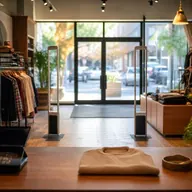
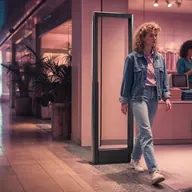
Once an AM or RF gate is installed at your entrance, every person passing between the antennas can be counted. People counter sensors mounted on the gate pedestals also detect direction of travel, so entries are separated from exits. The result is a number you have almost certainly never had before: your store's real visitor count.
The gap between that number and guesswork is enormous. Across the apparel stores we've fitted in Tehran, staff typically underestimate daily footfall by 30 to 50 percent, because they only remember the people they actually spoke to. Someone who walked in, spent two minutes looking at a rail and left again registers with nobody — but it registers on the gate.
In other words, an EAS gate does for a physical store what Google Analytics does for an online one: it gives you traffic, so you can finally work out your conversion rate.
What data does a retail security gate actually give you?
1. Footfall by hour
The most useful figure of all. Once you know that roughly 45 percent of your daily visitors arrive between 5 and 8 p.m., you stop building the sales rota blind.
2. Day-of-week patterns
In a lot of clothing stores, Saturday alone pulls close to double the visitors of a Tuesday. That means a Tuesday promotion is probably burning budget — unless filling your quiet days is precisely the point.
3. Alarm counts and where they happen
Alarm data isn't only a theft indicator. It also flags mis-tagged stock, a failing detacher or a till operator who needs more training. Cutting false alarms improves the customer experience directly.
4. Conversion rate
Divide the number of transactions at the till by the number of entries recorded at the gate and you arrive at the single most important metric in retail. We'll unpack that one below.
Store conversion rate: the number almost nobody measures
The maths is simple:
- Conversion rate = (transactions ÷ gate entries) × 100
- Average basket = total sales ÷ transactions
- Value per visitor = total sales ÷ gate entries
Say your store had 400 visitors and 60 transactions in a day. Your conversion rate is 15 percent. Now suppose next month your sales hold steady but footfall climbs to 550 — you have in fact got worse, and without gate data you would never have known.
| Store type | Typical conversion rate | Main growth lever |
|---|---|---|
| Apparel, bags and footwear | 10 to 20 percent | First greeting and the fitting rooms |
| Hypermarkets and supermarkets | 70 to 90 percent | Basket size and checkout queues |
| Jewelry | 5 to 12 percent | Follow-up and building trust |
| Cosmetics and personal care | 25 to 40 percent | Testers and shelf layout |
| Pharmacy | 80 to 95 percent | Add-on sales and supplements |
The important thing is not to measure yourself against anyone else's numbers. Establish your own baseline and compare month against month. Even a 2 percentage point lift in conversion, in a store seeing 500 visitors a day, is 10 extra sales every day.
Timing campaigns and staff shifts around footfall data
Once you have an hourly footfall curve, several marketing decisions become immediately actionable:
- Staffing: if 6 to 8 p.m. is your busiest window but conversion dips in exactly that window, your problem is too few staff, not too few customers.
- Time-limited offers: use a short, specific deal to fill the quiet hours (say 10 a.m. to noon). It costs your margin far less than a store-wide sale.
- When to send SMS and post on Instagram: push promotional messages 60 to 90 minutes ahead of your footfall peak, not during it.
- Changing the window display: change it on the day with the heaviest passing traffic, so the maximum number of eyes see it.
For chains, the same data lets you compare branches fairly: the branch with the lowest sales may actually have the best conversion rate, with nothing wrong beyond its location and low passing trade.
Measuring advertising with EAS gate data
The biggest headache in physical retail marketing is never knowing whether your advertising worked. Gate data largely solves it, because it bridges the gap between 'someone saw the ad' and 'someone walked through the door'.
How to do it in practice:
- Before the campaign starts, record average footfall over the previous 14 days as your baseline.
- Run the campaign (outdoor advertising, Instagram, local SMS or a seasonal promotion).
- Through the campaign, track the lift in footfall and the lift in transactions separately.
Three things can happen: footfall rises and sales rise with it (the campaign worked); footfall rises but sales stay flat (the message didn't match your actual stock or prices); or footfall stays flat while sales rise (the discount only moved your existing regulars and brought in nobody new). All three findings are worth having — but without a people counter on the gate, all three look identical.
Combining gate data with security tags, scanners and CCTV
Gate data really comes into its own when you combine it with the rest of your store equipment:
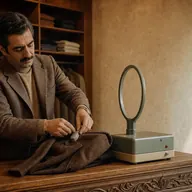
- Security tags and labels: colour-code your tags by product category and the alarm report tells you which category carries the most risk — and that category is usually your highest-demand stock, which is a marketing signal in itself.
- Barcode scanners and the POS: till data alongside gate footfall is what produces your conversion rate and your value per visitor.
- CCTV: use it for the qualitative side — the routes customers take and where they stop. The gate tells you 'how many', the cameras tell you 'how they moved'.
The full range of this equipment — AM and RF gates, tags and labels, barcode scanners, thermal printers and cameras — is available at vista-eas.com with technical advice and a warranty, and our specialists will recommend the right combination based on your entrance width and the goods you sell.
A practical checklist for setting up store analytics
- Step 1: confirm your gate has a counter module or can take one. Many AM models can be upgraded.
- Step 2: measure the width of your entrance accurately — incomplete coverage means inaccurate counts.
- Step 3: spend two weeks doing nothing but collecting data, changing nothing, so a baseline can form.
- Step 4: build one simple table: date, footfall, transactions, sales, conversion rate.
- Step 5: change only one thing per week (layout, shifts, an offer) so you can actually attribute the effect.
- Step 6: share the conversion rate with your sales team. People behave differently once they know they're being measured.
One common mistake worth flagging: you and your staff walk through the gate too. If there's no separate staff entrance, knock roughly 5 to 10 percent off the footfall figure to account for internal traffic and get a more honest conversion rate.
From data to more sales: your next step
It comes down to this: an EAS gate is a one-off cost, but if you take its data seriously it plugs a leak in your capital (theft) and shows you where your sales growth is hiding at the same time. A store that knows its conversion rate stops making decisions on gut feel.
If you don't have a gate yet, or the one you have can't count, the Vista Gate team can recommend the right option for your store type, entrance width and budget. For free advice and current pricing, call us now or message us through vista-eas.com — our specialists get back to you within one working day, and we'll visit your store in person if that's what it takes.